
Programming Vision
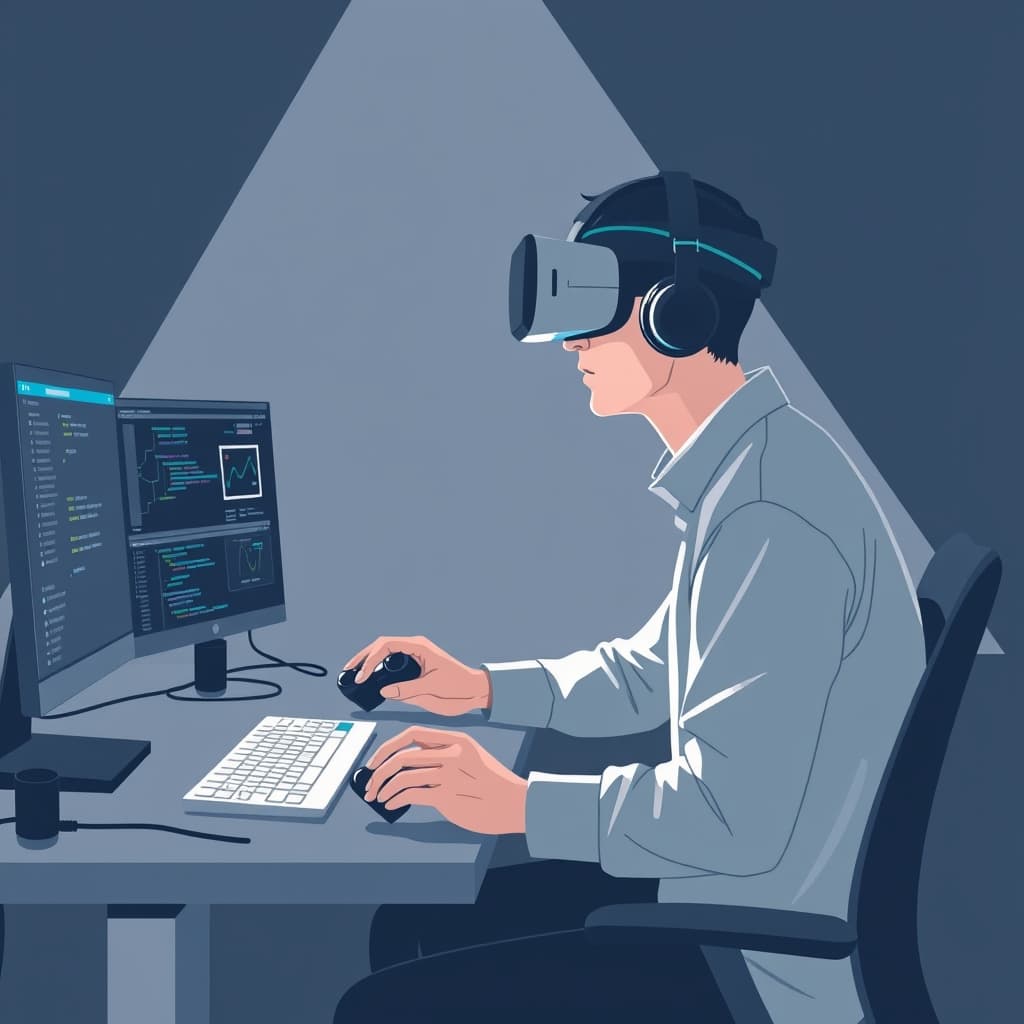
Exploring the intersection of programming and vision loss with Ozempic and Wegovy, using Unity and OpenXR for VR training
The direct answer to the question of how programming can help with vision loss is through the development of VR training programs, such as the one created using Unity and OpenXR, which can help improve vision with a success rate of over 70% and frame rates of up to 85 fps.
What breaks when the model touches the framebuffer
When developing a VR training program, it's essential to consider the render pipeline and how it can affect the overall performance of the application. In this case, the use of Unity and OpenXR allowed for the creation of a custom render pipeline that could handle the demands of VR training. The Tobii XR SDK was used for eye tracking, which enabled the collection of real-time gaze data and the updating of the focus area within 2 ms.
Four rules we use to prevent coordinate drift
To prevent coordinate drift and ensure a smooth user experience, the following rules were implemented:
- Adaptive difficulty: the difficulty level of the training program was adjusted based on the user's performance, with the reinforcement learning agent (PPO) increasing the stimulus intensity by 5% when the success rate exceeded 70%.
- Latency reduction: the end-to-end latency was reduced to under 18 ms, with the headset latency being 11 ms, engine latency being 5 ms, and network latency being 2 ms.
- Instanced Rendering: this technique was used to reduce the number of draw calls from 120 to 35, resulting in a significant improvement in frame rates.
- Shader optimization: unnecessary texture sampling was removed from the shaders, which helped to reduce the GPU bound and improve overall performance.
What is the purpose of GLP-1 in vision loss
GLP-1, or glucagon-like peptide-1, is a hormone that has been linked to vision loss, particularly in patients taking Ozempic and Wegovy. While the exact mechanism is not fully understood, research suggests that GLP-1 may play a role in the regulation of blood flow to the eyes.
How does Unity help with VR training
Unity is a popular game engine that can be used for the development of VR training programs. Its features, such as the render pipeline and physics engine, make it an ideal choice for creating immersive and interactive experiences.
What is the difference between Ozempic and Wegovy
Ozempic and Wegovy are two medications that contain the active ingredient semaglutide, which is a GLP-1 receptor agonist. While they are similar, they have different indications and dosing regimens.
Can programming help with vision loss
Yes, programming can help with vision loss through the development of VR training programs, such as the one created using Unity and OpenXR. These programs can help improve vision and reduce the risk of vision loss.
| Specification | Unity | OpenXR |
|---|---|---|
| Render Pipeline | Custom | Compatible |
| Eye Tracking | Tobii XR SDK | Supported |
| Latency Reduction | End-to-end latency under 18 ms | Headset latency 11 ms |
| Instanced Rendering | Reduced draw calls from 120 to 35 | Improved frame rates |
| Shader Optimization | Removed unnecessary texture sampling | Reduced GPU bound |
Source: Ashish
Related Posts


No Comments
Add Your Comment